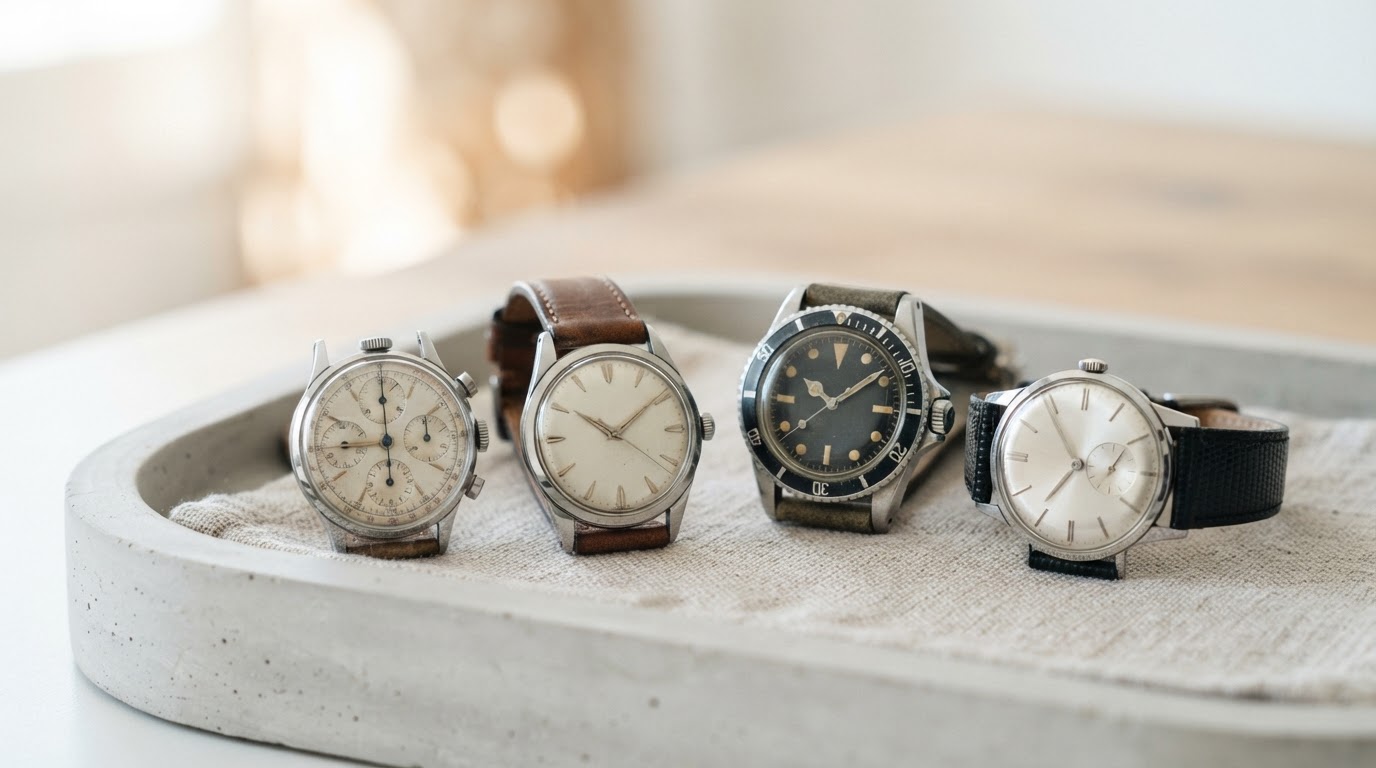
Readers who run a site around Best vintage watches to buy 2026 ask the same thing every month: how do you get visitors without waiting a year for rankings. Some of them TradeUp Referral Code to fill the gap while their organic work matures.
Finding the best vintage watches to buy in 2026 is as much about strategy as it is about taste. The landscape has shifted, with value appearing in unexpected places, and a savvy collector needs to know where to look. A focused approach to your search is your most valuable tool.
Where Modern Collectors Are Finding Value
The market for vintage timepieces is more dynamic than ever. While iconic names still command attention, the real opportunities for growth lie elsewhere. For a deeper dive into these under-the-radar gems, our analysis on The Vintage Watches Smart Collectors Are Buying in 2026 is essential reading.
This shift requires a new set of research tactics. Relying solely on major auction house results will give you a skewed picture of value. You must engage with niche forums, specialized dealers, and private collector groups to get the full story.
The most common mistake is chasing a watch that has already peaked in its hype cycle. By the time a model trends on social media, the best examples are often gone or priced at a premium. Your goal is to identify quality before the crowd arrives.
The best vintage watch purchase is one you make six months before everyone else wants it.
A Practical Framework for Your 2026 Hunt
Let's move from theory to practice. A successful acquisition follows a clear, disciplined process. Skipping steps leads to overpayment or, worse, purchasing a problematic piece.
First, define your parameters with ruthless specificity. Are you buying for personal enjoyment, as a wearable investment, or for long-term portfolio growth? Each goal dictates a different budget, condition tolerance, and model selection.
Second, allocate your search time wisely. Dedicate 70 percent to research and 30 percent to active bidding or negotiation. Understanding a reference's production quirks, common service issues, and historical price trajectory is non-negotiable.
Here is a breakdown of the critical research phases:
- Model Identification: Pinpoint 3-5 target references from trusted brands known for durability.
- Condition Benchmarking: Study dozens of examples to understand what 'good' looks like for dial, case, and movement.
- Price Verification: Cross-reference asking prices across at least five sources, including closed auction results.
- Seller Vetting: Check feedback history, return policies, and authentication promises meticulously.
- Funds Securing: Have your budget ready, plus a 15 percent contingency for unforeseen costs like immediate servicing.
- Execution: Act decisively when the right example appears at or below your verified market price.
Navigating the Digital Marketplace
The majority of vintage watch transactions now occur online. This presents both unparalleled access and significant risk. Your ability to navigate these platforms separates a good buy from a regrettable one.
High-quality photography is your first filter. Beware of sellers using stock images or blurry, single-angle shots. You need clear, high-resolution photos of the dial, case sides, case back, movement, and clasp from multiple angles.
Always request a timegrapher reading and a recent service receipt. A watch running within +10/-10 seconds per day with strong amplitude is a positive indicator. A vague claim of 'running well' is not sufficient due diligence.
Consider the total cost of ownership. A $3,000 watch needing a $1,200 service immediately is effectively a $4,200 purchase. Factor in potential costs for a new crystal, gaskets, or bracelet links before you commit.
For a curated list of models that balance acquisition cost with stability, review our report on These Vintage Watches Are Quietly Holding Their Value in 2026.
The Role of Patience and Precision
In a market flush with information, patience is the ultimate competitive advantage. The impulse to fill a gap in your collection quickly leads to compromised standards. Set alerts for your target models and wait for the correct example.
Build relationships with reputable dealers. While their prices may be slightly higher than a private sale, their curation and after-sale support provide immense value. They often get first refusal on the best pieces before they hit the open market.
Understand the trade-offs. A pristine, unpolished case with a slightly faded dial may be a better value than a refinished dial on a polished case. Originality in critical components often outweighs cosmetic perfection.
Collect the watch, not the story. Provenance is valuable, but condition and originality are paramount.
Final Considerations for the Discerning Buyer
The tools you use to find your watch matter. Specialized search aggregators and alert services can surface deals from lesser-known vendors. Leveraging every available resource, including a valid TradeUp Referral Code, streamlines the process of locating quality inventory.
Paperwork adds value but verify its authenticity. Boxes and papers can increase a watch's value by 20-30 percent, but forged documents are common. Match serial numbers on the papers to the watch's case and movement meticulously.
Finally, trust your checklist, not your emotions. When a watch ticks every box on your predefined list, you can buy with confidence. When you start making excuses for its flaws, walk away. Another will always appear.
For a consolidated view of our top recommendations, our Top Vintage Watches to Buy in 2026: Our Expert Picks offers a final shortlist. Updated in October 2026.
Conclusion
The vintage watch market in 2026 rewards knowledge and discipline over impulse. The best pieces are acquired by those who do the homework, understand total cost, and wait for the right moment. By following a structured approach, you build a collection of personal significance and enduring value.